
Starved of fortune, pallid gloom descends
Exhausted weapons lie in April mud
We burned our houses with transparent hands
We’d strength enough for that, oh yes, no more
No more is all we left th’ interminable Foe
Resistless Power we did long resist
He stood immutable outside our walls
His face a grizzled grim, unswerving eye
His look a mix of pity and desire
We watched Him o’er the bony peaks of Richmond
He entered there one hundred million strong
And found a shell, a corpse, dead streets or dying
He found a cave and not a palace here
And with a melancholy sigh He said
“And this is Richmond.” Yes, this Richmond is.
A Poem on the Occasion of a Christian Youth Rally
Seven thousand souls, a serried crowd;
Of sinners in a holy huddle, loud;
Not with confession or lament – no noise
Of broken humble supplicating voice
From throats made hoarse by moaning tearful hours.
Grave deities these would not serve, nor pow’rs
Of whispers small who suffer children come;
Divinities so meek are fine for some…
Ricky Gervais and God
Interesting follow-up to Gervais’ opinion piece in the WSJ earlier this week.
Gervais’ assumption that science is humble is well-meaning, but ultimately wrong on two counts: science assumes that everything knowable is observable and repeatable, and vice versa; and scientific activity is necessarily performed by human scientists, who may or may not be humble persons themselves.
I’m intrigued by Gervais’ candidness, though; his earlier piece gives good insight into the man. Makes me wish to have a conversation with him (smile).
Nothing, or Everything, to Do with Christmas
Last night, I felt a revulsion to entertainment and yet felt too weary to wrestle words by reading, and so sat down and sought something stirring and thoughtful to take in. After several false starts from the Netflix instant queue, I settled upon a strange selection having nothing to do with Christmastime: Ken Burns’ “Civil War” series. I dove headlong into the series: in the past twenty hours, four were spent in the years 1861-1862.
I’m not certain why the sudden fascination, but such has surely overtaken me. As the photographs and illustrations roll by, as the voices speak out of the troubled past their words of fear, wonder, love and loss, I am enthralled, and I cannot but feel a sharp disgust with the weak sentiments of our own age compared with theirs. The simplest soldier wrote with a clarity, a humour, a wit profounder than the trite status updates of our entire generation; he felt Life more keenly than the current race of men. And I cannot but conclude that the brilliance of his meanly educated mind, and the profoundness of his heart, were linked to his faith and to the principle for which he would give his life.
Which leads me to questions by which I accuse myself, and in which I stand indicted: what today are causes for which we feel so strongly? You who abhor abortion as an acceptable practise–how do you oppose it? You who revile racism in its myriad forms–in what way do you rage against it? At what wickedness would you point yourself and launch your whole heart, reckless of yourself, fired as the sole bullet of your living soul, that that evil would no more be?
I think it is perhaps more fitting to the season than I’d first assumed, these reflections on the Civil War. This is a study of blood, of slavery, of suffering and redemption. Pictured in it are face after face of those who lay down their lives for something higher: for some, yes, pride; but for others, the redemption of a nation. And is this not why He also came at Christmastime? He came “to proclaim freedom for the captives, and release from darkness for the prisoners”…
O God, teach me not to live only, but to pour out my life, to live for Your causes.
Observations at a Global Missions Conference
People dress and talk with the same overcare as any other conference-goers.
Not much brokenness. Not much unity. Not many tears. Not much listening. Lots of talking. And a continental breakfast.
…..
CCC in the Fall
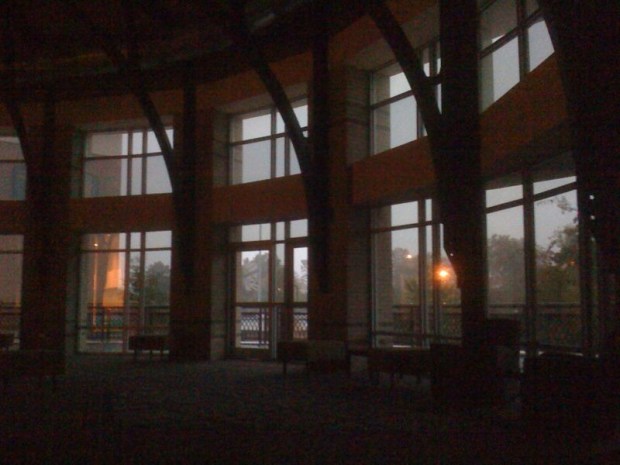
Oh how I love
dim rooms
on a
rainy
Fall
day
If Man Were Made
If man were made of fire
What colour would he be?
Of the infinite tones ‘tween blue and gold
From original spark to ember old
Like living flames which lick the funeral pyre–
In which shade see
Incendiary he?
d.d. ritterbush
False Science and Its Effects
What a bloody boring title, eh? Here is what it means.
Today I read a portion of Burroughs’ “Signs and Seasons” in which he praised perfect observation. It was actually an interesting passage, politely mocking the ancients who possessed strange notions about the meanings of various natural signs or occurrences. Burroughs wondered how they arrived at their odd conclusions about the workings of the honeybee, for example, when mere attentive observation should have shown them such theories were wrong. He praises observation as if it always leads to truth; and he declared that failure to focus in observation will lead to “false science.”
I thought of this phrase just now as I readied myself for sleep. I wondered to myself: if there is such a thing as “false science,” what does it lead to? Not to false facts, for “facts” (as we generally use the term) applies to true things only. We might better say that it usually leads to “false assumptions,” which are as easily labeled “false beliefs.” (I say usually because we might as well admit that what specialists in the field would characterise as “false science” has, on occasions, actually led to true things. So cheers to you false scientists out there.)
So science leads to beliefs. This conclusion would likely make a scientist’s Bunsen burn, but it seems an accurate statement. A botanist studies a pear tree exhaustively, season upon season, and following years of toilsome observation, he declares that given good weather the flowers will soon turn to fruit upon its boughs. So let me ask: is this a fact? or is it a belief? Most of us would like to say it is a certain fact, but it is not so certain. Simply because something happens three hundred thousand times in a row does not guarantee the next spring will prove the same. To borrow a Chesterton argument, why should the pear tree not suddenly begin to produce olives, or celery? How do we really know the why which makes it so?
Alongside these questions, I begin to wonder: how many layers of observation, from how many independent sources, will turn his statement from a personal belief into a full-fledged “fact”? What are facts??
I believe I ought to go to sleep. As a matter of fact, I will.
Amerigo
because he had slept
through the dark, dark night
caked in the dried sweat
of ten generations of men–
because he had wrestled
with terrible dreams
for the wounded blessing of morning–
because of these
he awoke
and knew the truth
about baptism
Let’s Pretend
There is something so beautiful about the word “pretend.” It carries its own richness with it, and no small bit of irony – it ends with “end,” when there is no end to pretending. A thing made-up may go on forever. It is as if the entire world is awash in snow, with familiar shapes now covered, hidden by a clean white canvas. Anything may be seen or done or written or walked upon, for as long as one may please. Yes, pretending may grow tiresome or dull, it may cross over its own footprints in the snow or retrace the same silly thought five times or more, but eventually its steps will pass again into unblemished snowbanks and chart new trails over the unseen ordinary, and will not rest until the pretender says so. Tiresome? At times. Tireless? Certainly so.
How is it that we can invent within our minds things which are not so? To pretend is to create a sort of honest lie, a fun or clever unreality, and we do it so easily – but how? I think this week I will consider “pretend” for my theme…
 thegreatknock